

Pain Management Beyond the Prescription Pad
Why a Multimodal Approach Matters in Workers’ Compensation
Pain remains one of the most common and challenging aspects of workers’ compensation claims. Whether an injury affects the back, joints, muscles, or nerves, poorly managed pain can delay recovery, increase medical utilization, and prolong time away from work. While medications remain an important component of treatment, pain is rarely driven by a single factor or solved by a single intervention. Increasingly, evidence supports a multimodal approach to pain management, which combines medications, physical therapy, and behavioral health interventions to address the physical, functional, and psychological factors that contribute to recovery. [1,2]
1. Pain Has More Than One Driver
One reason pain can be difficult to manage is that it is influenced by more than the injury itself. Inflammation, physical deconditioning, sleep disruption, stress, fear of reinjury, and psychological distress can all contribute to how pain is experienced and how long it persists.
Because pain can have multiple drivers, relying on a single intervention often produces limited results. Medications may help reduce symptoms and improve participation in recovery, but they are most effective when used as part of a broader treatment strategy that addresses the physical and behavioral factors affecting recovery. Treatment guidelines increasingly support a comprehensive approach that combines appropriate medication use with active therapies and patient engagement. [1,3]
2. Recovery Is About Function, Not Just Pain Scores
One of the biggest misconceptions in pain management is that pain must be completely eliminated before recovery can occur. In reality, many injured workers begin making meaningful progress before pain fully resolves.
Physical therapy helps bridge the gap between symptom management and functional improvement by helping individuals regain movement, confidence, endurance, and the ability to perform daily activities. Physical therapists work to restore mobility, improve strength, and address physical limitations that may interfere with recovery.
In workers’ compensation, success is often measured not by whether pain is entirely gone, but by whether an injured worker can safely resume normal activities and return to work. By promoting activity and preventing deconditioning, physical therapy can help support long-term recovery and improve functional outcomes. [2,4]
3. The Brain Plays a Role in Pain, Too
Pain is often viewed as a purely physical experience, but research continues to show that psychological factors can significantly influence pain perception and recovery.
Factors such as:
Depression
Anxiety
Fear avoidance
Pain catastrophizing
Poor sleep
can amplify pain and make recovery more difficult.
For some injured workers, addressing these barriers may be just as important as treating the injury itself. Behavioral health interventions can help individuals develop coping strategies, build resilience, improve engagement in treatment, and support adherence to recovery plans.
Approaches such as cognitive behavioral therapy (CBT) have demonstrated benefits in helping individuals manage chronic pain while improving function and quality of life. Early recognition and treatment of behavioral health concerns may also help reduce claim complexity and support more successful recovery outcomes. [2,5]
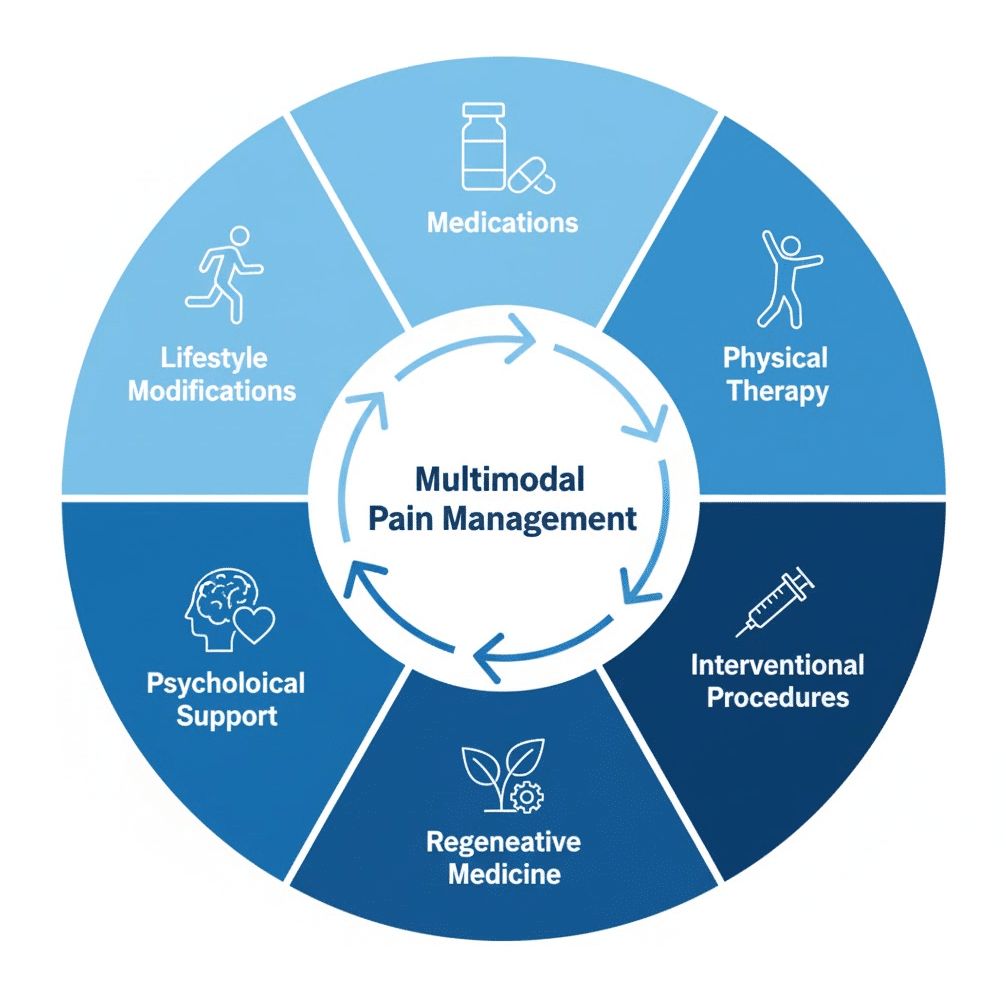
The Power of a Multimodal Approach
The most effective pain management strategies recognize that pain is rarely driven by a single factor.
Medications may help manage symptoms and support participation in treatment.
Physical therapy may help restore movement, strength, and function.
Behavioral health interventions may help address psychological barriers that can affect recovery.
When these approaches work together, they create a more comprehensive framework for helping injured workers recover and return to productive activity.
This approach aligns with a growing emphasis on function-focused care, where success is measured not solely by pain scores, but by improvements in mobility, daily activity, and return-to-work outcomes. [1,2]
By Sarah Cirildo
PharmD
For questions, e-mail pharmd@prodigyrx.com
References
1. American Academy of Pain Medicine. Multimodal Pain Management. Accessed August 21, 2026. Clinical Guidelines - AAPM2. National Institute for Health and Care Excellence. Chronic pain (primary and secondary) in over 16s: assessment of all chronic pain and management of chronic primary pain. Updated 2024. Accessed August 21, 2026. https://www.nice.org.uk/guidance/ng1933. Centers for Disease Control and Prevention. Nonopioid therapies for pain management. Updated 2025. Accessed August 21, 2026. https://www.cdc.gov/overdose-prevention/hcp/clinical-care/nonopioid-therapies-for-pain-management.html4. American Physical Therapy Association. Physical Therapy Guide to Chronic Pain. Accessed August 21, 2026. Guide | Physical Therapy Guide to Chronic Pain | Choose PT5. National Institute of Mental Health. Chronic Illness and Mental Health: Recognizing and Treating Depression. Updated 2025. Accessed August 21, 2026. https://www.nimh.nih.gov/health/publications/chronic-illness-mental-health