

Jideytro and the Expanding Role of Precision Oncology
Cancer treatment has changed dramatically over the past two decades. Rather than using the same treatment for all patients with a particular type of cancer, clinicians now have access to therapies that target specific genetic alterations that drive tumor growth. This approach, known as precision oncology, aims to match the right treatment to the right patient based on the unique characteristics of their disease.
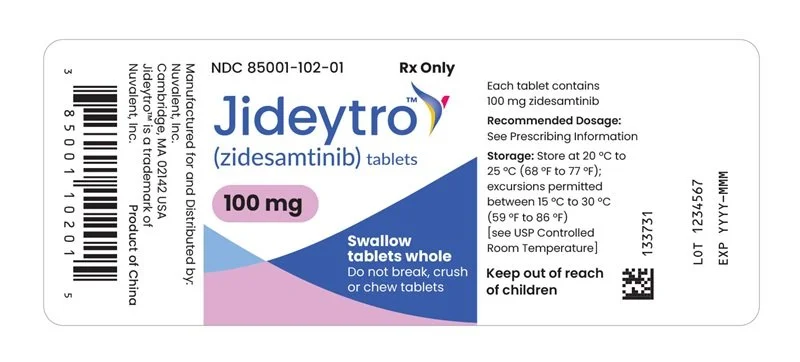
The recent approval of Jideytro® (zidesamtinib) highlights this ongoing shift toward personalized cancer care. In July 2026, the U.S. Food and Drug Administration approved Jideytro for adults with locally advanced or metastatic ROS1-positive non-small cell lung cancer (NSCLC) who have previously received treatment with a ROS1 kinase inhibitor. The approval was supported by clinical trial data demonstrating meaningful and durable responses in patients whose disease had progressed after prior treatment. [1,2]
—
Understanding ROS1-Positive Lung Cancer
Non-small cell lung cancer is the most common form of lung cancer. Within this population, approximately 1% to 3% of patients have ROS1-positive disease, a subtype caused by abnormal changes involving the ROS1 gene. These genetic alterations can stimulate uncontrolled cancer growth and progression. [1,2]
Unlike traditional cancer treatment approaches, identifying patients who may benefit from ROS1-targeted therapy requires molecular testing. Biomarker testing has become an increasingly important part of cancer care because it helps identify patients who are most likely to respond to a specific treatment. As precision oncology continues to evolve, treatment decisions are increasingly guided by a cancer's genetic profile rather than its location alone. [1]
What Makes Jideytro Different?
Jideytro is a next-generation ROS1-selective kinase inhibitor developed for patients whose disease has progressed following treatment with a prior ROS1 inhibitor. According to GSK, the therapy was designed to address treatment resistance and to penetrate the blood-brain barrier, an important feature because brain metastases are common among patients with ROS1-positive lung cancer. [1,3]
The FDA approval was based on results from the ARROS-1 Phase I/II clinical trial. In the study population, Jideytro demonstrated an objective response rate of 44%, with many patients maintaining their response for extended periods. The therapy also showed activity in patients with brain metastases and ROS1 resistance mutations. [1,2]
For patients who have experienced disease progression after prior targeted therapy, Jideytro offers an additional treatment option in an increasingly complex oncology landscape.
The Growing Importance of Biomarker-Driven Care
The approval of Jideytro demonstrates how rapidly oncology is moving toward personalized treatment strategies. Increasingly, therapies are being developed for smaller patient populations defined by specific genetic markers rather than broad disease categories.
This shift has significant implications for healthcare stakeholders. Access to biomarker testing is now an essential component of care because patients cannot receive targeted therapies if the underlying mutation is never identified. As a result, treatment decisions often begin with diagnostic testing rather than medication selection alone. [1]
This trend is expected to continue as researchers identify new biomarkers and develop therapies aimed at increasingly specific cancer subtypes.
Implications for Managed Care Pharmacy
Precision oncology presents both opportunities and challenges for managed care pharmacy professionals.
On one hand, targeted therapies may improve patient outcomes by focusing treatment on individuals most likely to benefit. This can help avoid ineffective therapies and support more personalized treatment plans. [1,2]
On the other hand, these therapies often require specialized diagnostic testing and may carry substantial costs. As more biomarker-driven treatments enter the market, managed care organizations will need to evaluate:
Coverage of molecular testing
Formulary placement
Clinical evidence supporting use
Utilization management strategies
Patient access considerations
Overall impact on healthcare spending
Managed care pharmacists are increasingly being asked to balance innovation with affordability while ensuring patients have access to appropriate treatment options.
Looking Ahead
The approval of Jideytro represents more than the introduction of a new treatment for ROS1-positive lung cancer. It reflects the broader transformation of oncology toward personalized, biomarker-driven care.
As scientific understanding of cancer continues to grow, targeted therapies are likely to become increasingly common. This evolution will require healthcare stakeholders to think beyond traditional models of treatment and reimbursement. Managed care organizations will need to balance innovation, access, and affordability, while workers' compensation programs may face new considerations when occupational disease claims involve advanced diagnostic testing and highly specialized therapies.
Ultimately, Jideytro serves as an example of how precision oncology is changing the cancer treatment landscape and how healthcare systems must adapt to support increasingly individualized care.
By Sarah Cirildo
PharmD
For questions, e-mail pharmd@prodigyrx.com
Citations
1. GSK. Jideytro (zidesamtinib) approved in the US for previously treated ROS1-positive non-small cell lung cancer. Published July 22, 2026. Accessed August 9, 2026. Available at: https://www.gsk.com/en-gb/media/press-releases/jideytro-zidesamtinib-approved-in-the-us-for-previously-treated-ros1-positive-non-small-cell-lung-cancer/.
2. Drugs.com. Jideytro (zidesamtinib) FDA Approval History. Updated July 22, 2026. Accessed August 9, 2026. Available at: https://www.drugs.com/history/jideytro.html.
3. GSK. Jideytro (zidesamtinib) approved in the US for previously treated ROS1-positive non-small cell lung cancer. PR Newswire. Published July 22, 2026. Accessed August 9, 2026. Available at: https://www.prnewswire.com/news-releases/jideytro-zidesamtinib-approved-in-the-us-for-previously-treated-ros1-positive-non-small-cell-lung-cancer-302832452.html.
