

Microdosing GLP‑1s: What the Early Evidence Says About Safety, Dosing, and Risk
Introduction
GLP‑1 receptor agonists have become the most talked‑about drug class in a generation — and workers’ compensation is feeling the impact. Over 15.5 million Americans reported using these medications in 2024 [1], and one pharmacy benefit analysis found GLP‑1 dispensing in workers’ comp jumped 14.2% between 2021 and 2023 [2].
But the story has taken a new turn. A practice called “microdosing” — taking fractions of the approved dose, stretching weekly injections into monthly ones, or counting pen clicks — is spreading fast, fueled by TikTok, cost pressures, and compounding pharmacies marketing customized formulations. Some clinicians are cautiously exploring it. Others are alarmed. And most injured workers doing it are doing it on their own.
Here’s what the evidence says.
Where Microdosing Came From
Microdosing a GLP‑1 means using doses significantly below FDA‑approved maintenance levels — or stretching the dosing interval far beyond the prescribed weekly schedule [3].
Three forces converged to make it popular:
Cost: brand‑name GLP‑1s can reach $1,500 per month [2]
Side effects: nausea and vomiting drive early discontinuation [4]
Drug shortages: opened the door to compounding pharmacies offering non‑standard formulations [5]
Online, people aren’t just microdosing for weight loss. Social media users tout benefits like quieting “food noise,” curbing alcohol cravings, and even anti‑aging effects [6]. None of these uses are FDA‑approved.
“No clinical trials. No safety studies. No official recommendations. Microdosing GLP‑1s is spreading entirely on anecdote.” — American Association of Clinical Endocrinology [7]
A January 2025 Diabetes Care letter suggested microdosing “could play a valuable role” in managing cost and tolerability — but stopped short of endorsing it as standard practice [7].
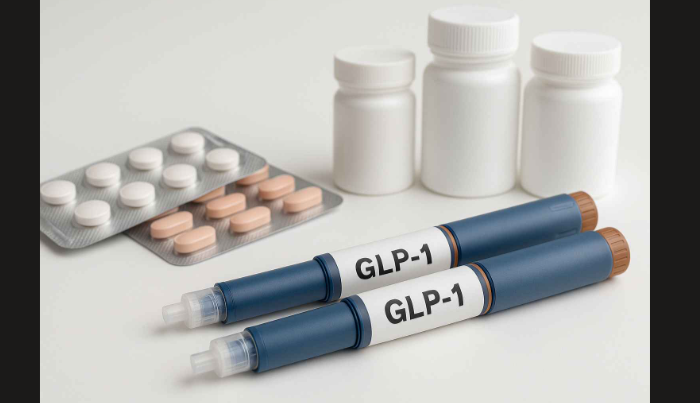
Less Isn’t Just ‘Less Effective’ — It’s a Different Risk Profile
FDA‑approved dosing protocols exist for a reason. Semaglutide starts at 0.25 mg weekly and escalates over 16–20 weeks to a therapeutic maintenance dose [8].
A 2024 STEP‑extension analysis confirmed that clinically meaningful weight loss requires reaching and maintaining target doses — and that sub‑therapeutic dosing produces significantly smaller reductions [9].
Real‑world data echo this: patients who remained on low doses lost roughly half the weight seen in trials [10].
Then there’s the compounding risk. The FDA has flagged serious dosing errors with compounded semaglutide — including a documented fivefold overdose caused by unit mis‑entry, resulting in severe adverse events [11]. When tiny volumes are measured by pen clicks, the margin for error is not small.
The Side Effects That Should Be on Your Radar
Muscle Loss — The Hidden Workforce Risk
DXA imaging from STEP‑based research suggests up to 40% of total weight lost on semaglutide may be lean mass [15]. The 2025 SEMALEAN study found measurable skeletal muscle loss over 12 months, warning these changes “could predispose vulnerable patients to sarcopenia despite apparent improvements in body composition” [16].
For workers in construction, warehousing, or healthcare, this isn’t a footnote — it’s a return‑to‑work risk.
Bone Density — Emerging and Unsettled
A 2024 randomized controlled trial found 52 weeks of semaglutide reduced hip BMD by 2.6% and lumbar BMD by 2.1% [18]. A 5‑year matched analysis presented at the 2026 AAOS Annual Meeting reported a 30% higher relative risk of osteoporosis and double the rate of osteomalacia among GLP‑1 users [19].
Yet a 2025 real‑world study in type 2 diabetes patients found no increased osteoporosis risk [20].
The evidence is unsettled — which is itself important for high‑risk workers.
Hair Loss and Nutritional Deficiencies
A 2025 scoping review identified over 1,000 U.S. reports of alopecia linked to GLP‑1 receptor agonists [12]. Rapid weight loss depletes iron, zinc, biotin, and vitamin D — all triggers of telogen effluvium [14].
The good news: it’s generally reversible with nutritional support. The concern: without structured dietary counseling, these deficiencies also worsen muscle loss and fatigue, quietly undermining rehabilitation progress.
What This Means for Your Claims
Obesity touches nearly every corner of workers’ compensation. Roughly 70% of American adults are overweight or obese [21], and injured workers with obesity face longer recoveries, higher complication rates, and elevated total claim costs [22].
GLP‑1 therapies have real potential to change that equation — including the 2024 FDA expansion of semaglutide for cardiovascular risk reduction in patients with obesity and established heart disease [8]. But the side‑effect profile introduces practical questions every stakeholder should consider:
Muscle loss in physical jobs: Significant lean‑mass loss can slow rehabilitation progress, even when weight loss appears beneficial.
Bone integrity after injury: Emerging evidence of reduced bone mineral density raises concerns for workers in fall‑prone or high‑impact environments.
Compounding and dosing errors: Injured workers accessing GLP‑1s through compounding pharmacies face documented risks of dosing mistakes, unknown purity, and inconsistent potency [11].
The Bottom Line
GLP‑1 receptor agonists are real medicines with real evidence behind them. The microdosing trend shows how powerful patient demand has become — but it’s running ahead of the science in ways that create legitimate clinical and liability questions.
For professionals in workers’ compensation, risk management, and occupational health, the message isn’t to avoid these medications. It’s to understand them fully: their proven benefits, their side‑effect profile across all doses, and the downstream physical consequences that affect rehabilitation and safe return to duty.
Clinical consensus is consistent: resistance exercise, protein‑adequate nutrition, micronutrient monitoring, and baseline DXA imaging for high‑risk patients should accompany GLP‑1 therapy in any occupational health context where physical function is the goal.
By Fatima Alukidi
PharmD Candidate (P3)
For questions, e-mail pharmd@prodigyrx.com
Citations
1. Sedgwick. Weight loss medications in workers’ compensation: Impact, claims and alternatives. March 28, 2025. Weight loss medications in workers’ compensation: Impact, claims and alternatives | Sedgwick.2. Enlyte Pharmacy Solutions. Ask the pharmacist: GLP-1 drugs in workers’ compensation. Ask The Pharmacist: GLP-1 Drugs in Workers’ Compensation | Enlyte.3. Hackensack Meridian Health. Is microdosing GLP-1s safe? May 12, 2026. Is Microdosing GLP-1s Safe? What to Know Before You Try It.4. Wilding JPH, et al. Once-weekly semaglutide in adults with overweight or obesity. N Engl J Med. 2021;384(11):989-1002. Once-Weekly Semaglutide in Adults with Overweight or Obesity | New England Journal of Medicine.5. Medscape. Some patients — and doctors — turn to microdosing GLP-1s. January 2025. Some Patients — and Doctors — Turn to Microdosing GLP-1s.6. STAT News. GLP-1 microdosing is popular, but there’s little evidence it works. May 29, 2026. GLP-1 microdosing is popular, but there's little evidence it works | STAT. 7. Pharmaceutical Technology. GLP-1RA microdosing trend continues despite anecdotal evidence. October 28, 2025. GLP-1RA microdosing trend continues despite “anecdotal evidence” - Pharmaceutical Technology.8. FDA. Approves Wegovy (semaglutide) for chronic weight management. June 2021; updated March 2024. 9. Jastreboff AM, et al. Tirzepatide once weekly for the treatment of obesity. N Engl J Med. 2022;387(3):205-216. Tirzepatide Once Weekly for the Treatment of Obesity | New England Journal of Medicine10. HealthVerity. GLP-1 trends 2025: real-world data, patient outcomes & future therapies. August 26, 2025. GLP-1 trends 2025: real-world data, patient outcomes & future therapies.11. Wireless-Life Sciences Alliance. Microdosing semaglutide: Trend or trap? December 23, 2025. Microdosing Semaglutide: Trend or Trap? What the Evidence Says in 2025 | Wireless-Life Sciences Alliance. 12. Rojas Lopez R., et al. Alopecia as an emerging adverse effect associated with GLP-1 receptor agonists. Cureus. 2025. Alopecia as an Emerging Adverse Effect Associated With Glucagon-Like Peptide-1 (GLP-1) Receptor Agonists for Weight Loss: A Scoping Review | Cureus.13. Branyiczky Z, et al. Effects of GLP-1 receptor agonists on hair loss and regrowth. Int J Dermatol. October 2025. Effects of GLP‐1 Receptor Agonists on Hair Loss and Regrowth: A Systematic Review - Branyiczky - 2026 - International Journal of Dermatology - Wiley Online Library. 14. Haykal D. Alopecia and semaglutide: connecting the dots for patient safety. J Cosmet Dermatol. 2025;24:e70125. (PDF) Alopecia and Semaglutide: Connecting the Dots for Patient Safety15. Burnham J. GLP-1s and bone health: what the evidence says. April 2026. GLP-1s and Bone Health: What the Evidence Says About Semaglutide, Bone Density, and Muscle Loss | Jeremy Burnham, MD.16. Alissou M, et al. Impact of semaglutide on fat mass, lean mass and muscle function: the SEMALEAN study. Diabetes Obes Metab. 2025. Impact of Semaglutide on fat mass, lean mass and muscle function in patients with obesity: The SEMALEAN study - Alissou - 2026 - Diabetes, Obesity and Metabolism - Wiley Online Library.17. American Council on Exercise. GLP-1s and lean mass: what the research shows. June 2025. ACE - Certified™: June 2025 - GLP-1s and Lean Mass: What the Research Shows.18. Hansen MS, et al. Once-weekly semaglutide vs placebo in adults with increased fracture risk. EClinicalMedicine. 2024;72:102624. Once-weekly semaglutide versus placebo in adults with increased fracture risk: a randomised, double-blinded, two-centre, phase 2 trial - PubMed. 19. AAOS 2026 Annual Meeting. Studies explore GLP-1 receptor agonist use and long-term musculoskeletal health. March 2, 2026. Studies explore: GLP-1 receptor agonist use and its impact on long-term musculoskeletal health - AAOS 2026 Annual Meeting Press Kit.20. Chen M, et al. Use of GLP-1 receptor agonist and risk of osteoporosis in type 2 diabetes. Front Endocrinol. 2025;16:1586589. Use of GLP-1 receptor agonist and risk of osteoporosis among patients with type 2 diabetes: a real-world study - PubMed. 21. MyMatrixx by Evernorth. FDA approves Wegovy: how do GLP-1s affect workers’ comp? FDA Approves Wegovy: How Do GLP-1s Affect Workers’ Comp?22. Sedgwick. Weight loss medications and workers’ comp: good or evil? August 5, 2025. Weight loss medications and workers’ comp: good or evil? | Sedgwick.
