
Innovation Theater: Why the Most Impressive PBM in the Room Isn’t Always the Best One
Several years ago, I was consultant helping a client select a PBM. We invited three finalists.
The incumbent.
A hungry mid-sized PBM that checked most of the boxes.
And one of the industry’s giants.
The incumbent was running stale. The challenger was innovative, responsive, and aligned. The giant arrived with something else entirely. A production.
The Performance
The presentation was flawless. Beautiful dashboards. Custom reports. Sophisticated analytics. Clinical committees. Executive summaries. Roadmaps. Heat maps. Scorecards. Portal demos. Sound familiar?
Everything looked impressive. The room loved it. Especially the CFO. And that’s when I realized something: Most buyers don’t struggle to identify value. They struggle to separate value from theater.
The Bridge to Nowhere
As consultants, our job wasn’t to buy the most impressive presentation. It was to answer three questions:
Will it lower costs?
Will it improve outcomes?
Will it reduce friction?
Everything else was secondary. But that’s the danger of innovation theater. The dashboard becomes the product. The report becomes the strategy. The analytics become the outcome. A bridge gets built. It just doesn’t lead anywhere.
The Decision
The giant won. Not because the fundamentals were better. Because the presentation was. And no one ever gets fired for choosing “the giants.”
Against my recommendation. Against HR’s recommendation. The room fell in love with the performance. And the performance won… for about thirteen months.
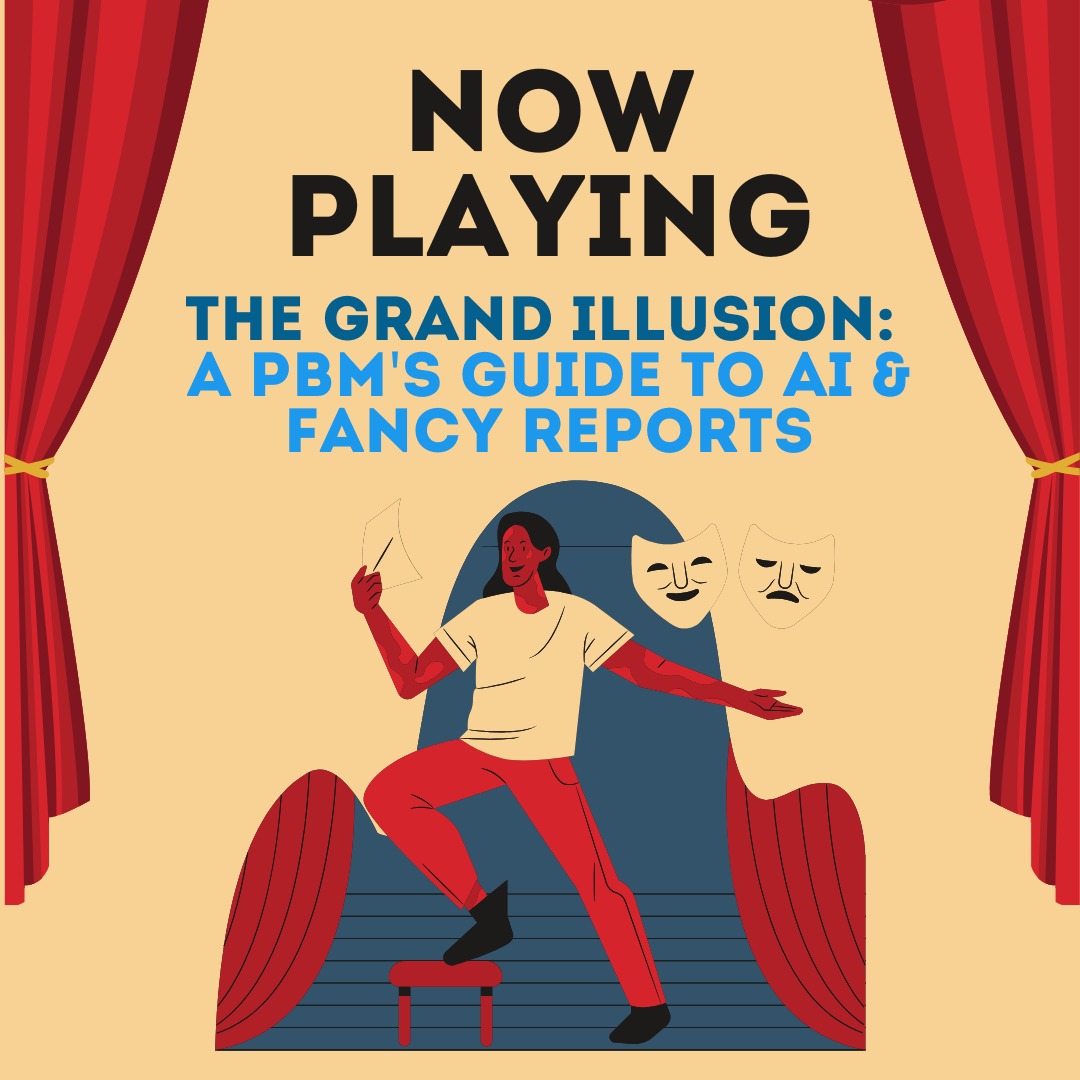
The Sequel Nobody Wanted
Thirteen months later we were back in the same conference room. Different mood. Same people. Same discussion.
Costs hadn’t improved.
Outcomes hadn’t improved.
Friction hadn’t improved.
The dashboards were still beautiful. The reports were still impressive. The portal still worked exactly as advertised. And yet somehow nothing important had changed. When we pulled back the curtain, the answer was obvious.
The technology was new.
The model underneath wasn’t.
The incentives were the same.
The habits were the same.
The economics were the same.
It was a distinction without a difference.
And that’s a lesson the workers’ compensation industry keeps relearning. Innovation isn’t a portal. It isn’t a dashboard. It isn’t a report. It isn’t a prettier way to describe the same process.
Innovation is a measurable improvement in outcomes. Everything else is marketing.
The Real Test
This is becoming one of the defining questions in workers’ compensation pharmacy.
Not: Is this innovative? But: What exactly got better because of it?
Lower costs?
Better outcomes?
Less friction?
Faster recovery?
Better patient experience?
If the answer isn’t clear, it may not be innovation. It may be theater.
Curtain Call
You can put a new dashboard on an old model. You can redesign the reports. You can add AI, analytics, portals, committees, and buzzwords.
But eventually the curtain falls. And when it does, buyers are left with one question: What actually changed?
Because real innovation doesn’t always create a better presentation. But it consistently creates better results.
And in workers’ compensation pharmacy, the difference between the two is often measured in millions of dollars.
If you’re evaluating PBM innovation, start with the outcomes—not the performance. And If you’re tired of innovation theater, let’s talk.
About P4P
A Strategic Dose of Clarity in a Noisy PBM Market
Written by Prodigy CEO, Del Doherty, P4P delivers sharp, consultative insights for decision-makers who are tired of legacy models, hidden costs, and passive vendors. Each piece is a prescription—cutting through the noise to reveal what actually drives performance in pharmacy benefit management. No fluff. No spin. Just insight that pays off.